
The digital world is undergoing its next major transformation. After the eras of websites and SEO, we are entering a new frontier where AI agents and Large Language Models (LLMs)—such as ChatGPT, Claude, and Gemini—are becoming the primary gateways to information, services, and decision-making. Users increasingly rely on AI assistants instead of manually browsing websites, comparing pages, or navigating menus. In this shift, traditional websites—designed for human eyes and human clicks—are no longer enough.
While SEO helped businesses stand out to humans, it does not automatically make content accessible or actionable to AI systems. LLMs do not “browse” the way humans do. They require structured, machine-friendly interfaces, not unstructured pages filled with buttons, menus, and visuals. This is where the Model Context Protocol (MCP) becomes the next evolution of digital presence.
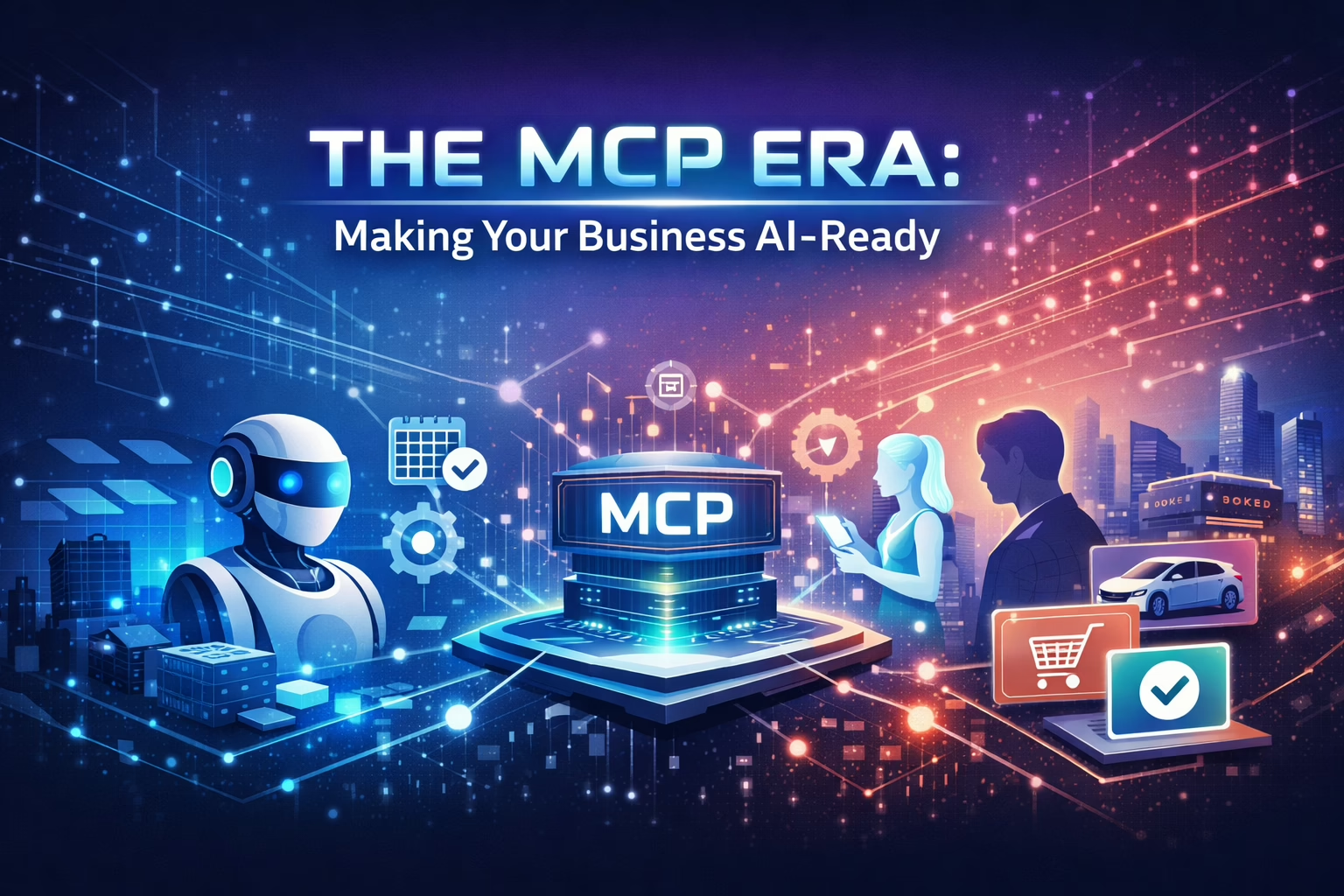
MCP is a standardized framework that allows your services, tools, workflows, and data to be directly accessible to AI agents. Instead of humans clicking buttons, AI systems call capabilities exposed by your MCP server. These capabilities can fetch data, trigger actions, query databases, perform transactions, or automate tasks—all without requiring a human to interact with a website.
Imagine a future user asking an LLM:
“Book me an appointment with the nearest service center.”
Instead of the AI scraping web pages, it communicates directly with your MCP server to check availability, retrieve pricing, and complete the booking instantly.
This is the core power of MCP: machine-native accessibility.
By exposing structured endpoints through MCP, you make your business AI-ready. Your services become discoverable, usable, and automatable by intelligent agents. This is not just a technological upgrade—it is the next stage of visibility. In the same way businesses once needed websites, and later needed SEO, they now need MCP compatibility to stay relevant in an AI-driven landscape.
The MCP era represents a fundamental shift:
“If websites were built for humans, MCP servers are built for AI.”
To remain competitive, accessible, and discoverable in the age of AI-first interactions, businesses must extend their digital presence beyond websites and search engines. They must make their data, services, and workflows available directly to LLMs through MCP.